

Fashion Tech Has an Adoption Ceiling. The Smart Startups Noticed
Some startups are responding by building for where shoppers already are.

Fashion is high interest, but not always high habit. Every week I see a new consumer fashion tech app launch, yet most of us are not adding these tools to our routines.
The interesting part is that the best fashion tech may still shape what we buy, even if it never becomes an app on our phone.
In my last post, I wrote about the very real 1–3 app ceiling that limits how many fashion tech apps people actually adopt. I argued that retention should not be measured through daily engagement, but through whether a product shows up at the moments that matter in someone’s style routine.

But there is another response to this constraint. Two startups I’ve been watching closely illustrate it well. We’ll hear from them later in this post.
Even genuinely useful products may never earn a permanent slot in someone’s routine. The value has to move instead. It migrates to where the shopper already is: retailer sites, checkout flows, returns portals, email, loyalty programs, resale marketplaces, and creator storefronts.
This is why B2B2C is emerging as a distribution response to real consumer limits.
The Signal That Changed the Model
Consumer fashion tech is built for engagement. Enterprise fashion tech is built for workflow and ROI. More companies now sit somewhere in between: the buyer is the brand, but the value is felt by the shopper.
This shift became clearer to me when Tote’s founders, Kathleen and Gordon, announced they were taking Tote off the app store. Tote’s pivot is slightly different from a classic B2B2C model. Rather than serving shoppers directly, the company now sells tools to brands that ultimately shape the consumer experience behind the scenes.
The mission had stayed the same but the distribution shifted. When I asked Kathleen Sheppard what triggered the pivot, she pointed to a very specific signal from brands:
“While building our consumer app our business model was always centered around working with brands… we started hearing feedback from brands that they wanted to access and implement our proprietary tools and data infrastructure in their own platforms.”
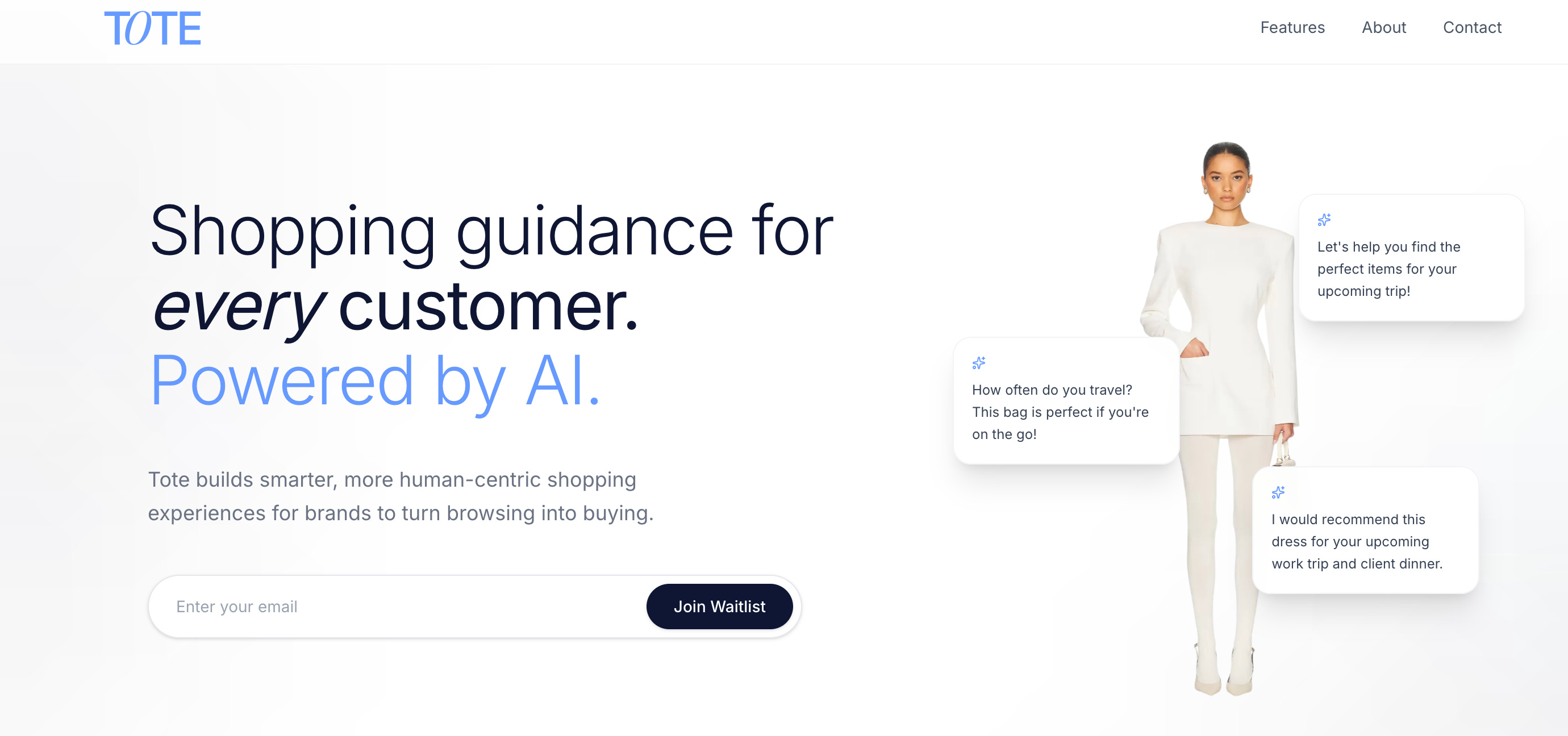
The signal didn’t come from consumer downloads. It came from brands asking to deploy Tote’s capabilities inside their own environments. In other words, the value wasn’t the app. It was the intelligence behind it.
Once You Notice These Patterns, You See Them Everywhere
Brands Don’t Want Another App Either
Tote’s pivot points to a broader shift: some brands would rather implement capabilities directly inside their own platforms than rely on a separate consumer app.
When a capability lives inside the brand’s environment, it can influence the moments where purchase decisions happen.
When tools move inward like this, the product has to be legible as infrastructure rather than simply another app. The consumer may still feel the benefit, but the technology itself operates inside the brand’s system.
The Story Has Two Audiences
This model can be difficult to communicate because it serves two audiences at once: the shopper experiencing the benefit and the brand paying for the outcome. Many startups end up speaking clearly to one side or vaguely to both.
Stiled approaches the problem by starting with consumer behaviour. Founder Will explained, “We went B2C2B because we believe the real fix starts with the consumer.” When shoppers understand how something will actually fit on them, their behaviour changes. “That behavior change is what reduces the rate of returns.”
But the company doesn’t frame the solution as purely consumer-facing. Retailers still play a role in improving sizing standards and reducing waste across the system. As Will puts it, “Tackling both sides in tandem is what actually moves the needle faster and gives many data points to pinpoint issues.” He admits the challenge is mostly narrative: “It’s not the most obvious business model to explain, but once you tell the story from both sides it clicks.”

Outcomes Are Easy to Promise. Mechanisms Are Harder.
Many fashion tech products lead with outcomes like higher conversion or fewer returns. Those claims only become convincing when the mechanism behind them is clear.
Stiled’s explanation makes that chain visible. The behaviour change leads to fewer sizing mistakes, which then reduces return rates and generates more accurate fit data for brands. The strongest B2B2C companies explain how the outcome actually happens instead of relying on promises alone.
The Product Is Still There. The App Isn’t.
This shift is also changing how some companies define themselves. Instead of positioning the product as something shoppers use directly, they position it as a capability brands can deploy across different parts of their systems.
Tote’s repositioning reflects this. As Kathleen explained to me, the company no longer sees itself as a single consumer platform. “Instead of being one user-facing platform, we’re now a ‘headless’ set of tools that can be leveraged by brands of all sizes.” In practice, that means Tote operates more like an intelligence layer that brands can integrate wherever it makes the most sense within their own platforms.
Where The Model Gets Tricky
Embedded solutions solve one clear problem: they improve the shopper’s experience without asking the shopper to adopt another platform. But that same advantage introduces a new tension: the more embedded the product becomes, the easier it is for the technology itself to disappear.
That invisibility creates two risks.
Risk 1: Commoditization
When a company moves toward a headless or embedded model, it gains distribution but risks looking like just another vendor tool. If the role of the product in the shopping system is not clearly defined, the capability can quickly blend into the broader stack of integrations brands already use.
Risk 2: Explanation difficulty
Since B2B2C companies are always explaining themselves to two audiences at once, when those two stories are not clearly connected, the product can start to sound generic. The value becomes difficult to articulate because the consumer identity and the business identity are presented separately rather than as one system.
This is why so many early-stage fashion tech companies sound interchangeable on their homepage. They lead with integrations, outcomes, or broad category terms before naming the specific moment they actually improve.
Positioning becomes practical here. Not abstract brand strategy, but the ability to clearly say what changes for the shopper, what changes for the brand, and why it matters. The companies that win will not just build useful tools. They will be able to explain their role in the system clearly enough that shoppers feel the benefit and brand teams can justify the buy.
That translation layer has become increasingly interesting to me the more time I spend looking at early-stage fashion tech.
The B2B2C Clarity Test
Will from Stiled sums up the messaging challenge perfectly:
“It’s not the most obvious business model to explain, but once you tell the story from both sides it clicks.”
The companies that make this model legible tend to answer three simple questions.
1. What shopper moment do you improve?
Understanding fit. Discovering relevant products. Gaining confidence before checkout.
2. What brand metric improves because of that moment?
Return rates. Conversion. Merchandising accuracy. Customer satisfaction.
3. What mechanism connects the two?
Better visualization. Behavioural data. Contextual recommendations.
When you map those pieces together, the value becomes easier to explain.
Tote
AI learns shopper context → brands integrate the intelligence into their experience → discovery and conversion improve.
Stiled
Shopper sees the truth about fit → behaviour shifts → returns drop → brands gain fit data and lower return rates.
The more time I spend looking at early-stage fashion tech, the more it becomes clear that building the tool is only half the challenge. Being able to clearly articulate where that tool fits in the system is what makes the model click.
Tote and Stiled both point to the same reality from different directions. Tote learned that brands do not necessarily want another platform. They want proprietary tools and data infrastructure they can implement inside their own environments.
Stiled learned that a B2B2C model is not obvious until you tell the story from both sides, what the shopper gets and what the brand gets. That is the lesson I keep coming back to: in a world where consumers will not adopt endless new fashion apps, distribution shifts toward integrations. But distribution alone does not create differentiation.
In practice, that means naming the moment they improve, the metric they move, and the mechanism connecting the two.
This is where consumer and enterprise tech intersect. If you want to understand the difference between the two, this is your next read:
Finding Your Lane in Fashion Tech: Consumer vs. B2B

For anyone trying to break into fashion tech (hi, it’s me), the job search is already hard enough but figuring out where you fit and what you’re actually applying to is its own challenge.
This is the topic 👏🏻👏🏻👏🏻👏🏻
Yes!! Our mission is the same - getting shoppers to the products that fit them best as easily as possible. Just a different approach.